Public university, right to education and event
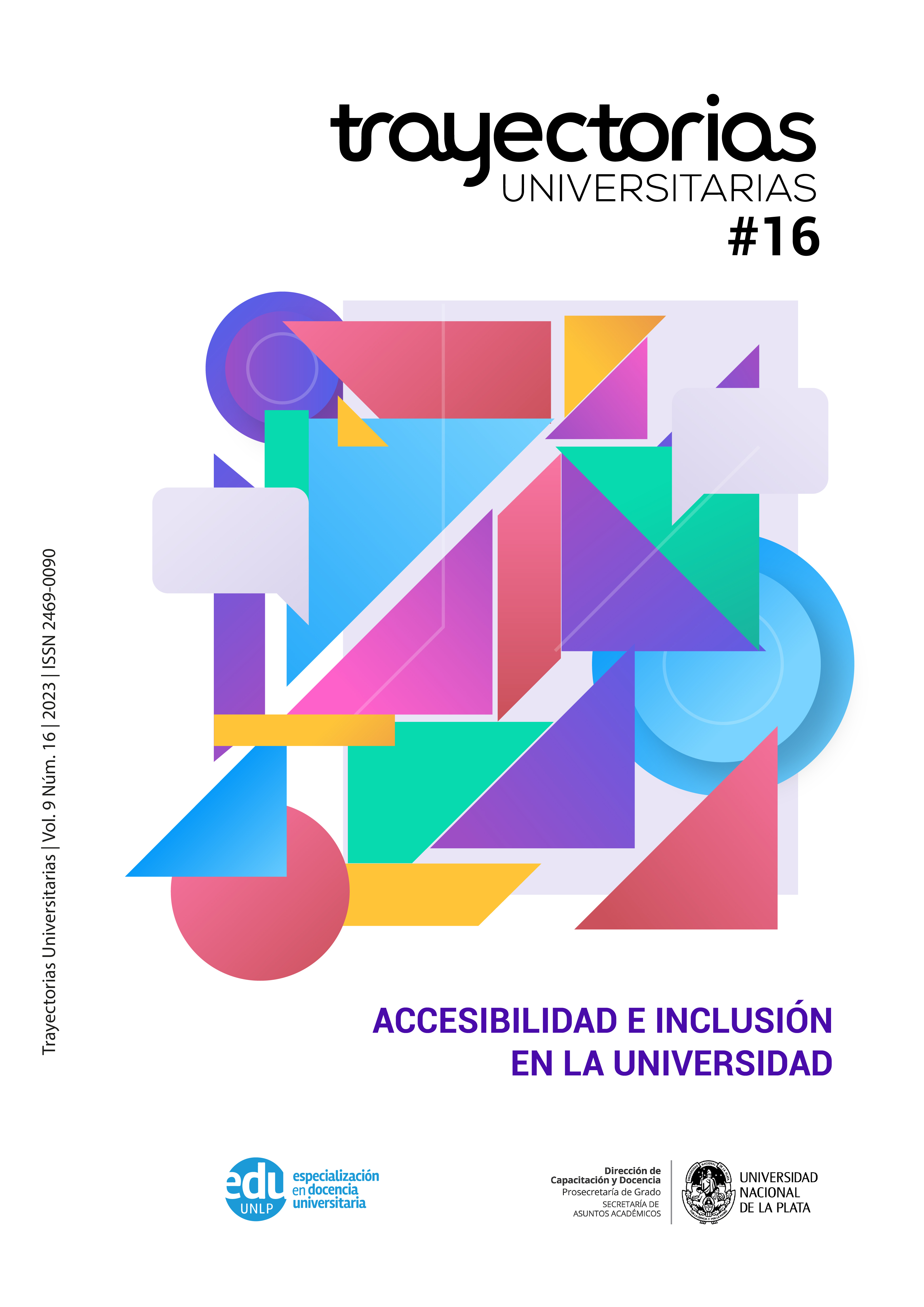
The experience of the University Technician in Sign Language Argentina (TULSA) FTS-UNER
DOI:
https://doi.org/10.24215/24690090e120Keywords:
sign language, university education, deaf communityAbstract
The Tecnicatura Universitaria en Lengua de Señas Argentina (TULSA) is, without a doubt, a political epistemic rupture to the academic normality of the universities, particularly the UNER, a commitment to the interruption of monolingualism in the processes of appropriation of knowledge as community social capital and an agenda for the future, since as an event (following the Deleuzian tradition of the term) as a novel irruption that is exhausted with the development of the experience of which we only narrate some dimensions here. In this article, then, we recover some descriptive and analytical aspects of the experience of management and development of TULSA as a training proposal in the teaching of Argentine Sign Language aimed primarily at natural (native) speakers of that language: deaf people. As a unique training proposal in the country and the region, it seeks to settle a historical debt of university training institutions and tertiary level training institutions with the Argentine deaf community, specifically, the training of Argentine Sign Language Instructors respecting the principle enshrined in the International Convention for the rights of persons with disabilities, that of educating themselves in their own language.
References
Almeida M. E., Angelino, M. A., Anghinolfi, N. y Druetta, J. C. C. (2019). La formación de intérpretes de Lengua de Señas Argentina, apuestas y desafíos. En M. Méndez y B. Misischia (Comps.), Políticas en educación superior en las universidades públicas. Discapacidad y universidad. Período 2014-2016 (pp. 49-54). Eudene.
Almeida, M. E., Angelino, M. A., Druetta, J. C. C. y Vieytes, J. (2020). Educación Superior y justicia cognitiva: la experiencia de la Tecnicatura Universitaria en Lengua de Señas Argentina (TULSA) en la Facultad de Trabajo Social. Educación y Vínculos, 3(5), 87-103.
Angelino, M. A. (2019). Sistematización de experiencias en la Educación Superior con personas sordas. En M. Méndez y B. Misischia (Comps.), Políticas en educación superior en las universidades públicas. Discapacidad y universidad. Período 2014-2016 (pp. 44-48). Eudene.
Caicedo, J. A. N. y Castillo, E. (2008). Indígenas y afrodescendientes en la Universidad Colombiana: nuevos sujetos, viejas estructuras. Cuadernos Interculturales, 6(10), 62-90.
Quijano, A. (1993). Colonialidad del poder, eurocentrismo y América Latina. En E. Lander (Comp.), La colonialidad del saber: eurocentrismo y ciencias sociales. Perspectivas latinoamericanas (pp. 201-246). CLACSO.
Rinesi, E. (2019). No hay derecho. En M. Méndez y B. Misischia (Comps.), Políticas en educación superior en las universidades públicas. Discapacidad y universidad. Período 2014-2016 (pp. 12-16). Eudene.
Downloads
Published
Issue
Section
License
Copyright (c) 2023 María Eugenia Almeida, María Alfonsina Angelino

This work is licensed under a Creative Commons Attribution-NonCommercial-ShareAlike 4.0 International License.
Esta obra está bajo una licencia internacional Creative Commons Atribución-NoComercial-CompartirIgual 4.0.
Acorde a estos términos, el material se puede compartir (copiar y redistribuir en cualquier medio o formato) y adaptar (remezclar, transformar y crear a partir del material otra obra), siempre que a) se cite la autoría y la fuente original de su publicación (revista y URL de la obra), b) no se use para fines comerciales y c) se mantengan los mismos términos de la licencia, sin que sea necesario pedir permiso previo al editor o al/la autor/a.